
Emergency Roof Tarping: When and Why It's Necessary
Published · Related to Emergency Roof Tarping
Emergency tarping is one of those services that homeowners hope never to need but are grateful exists the moment they do. Understanding when it’s actually warranted, and what separates a tarp job that holds up from one that fails in the next wind gust, matters if you ever find yourself needing it.
When Tarping Is Actually Necessary
The clearest indicator is active water intrusion — a visible breach in the roof letting rain or snowmelt into the structure right now. This includes storm-created holes, sections where shingles have been torn away exposing bare deck, and failed flashing actively letting water through during weather events. If water is entering the structure currently, tarping is the appropriate immediate response while a permanent repair gets planned.
When It’s Not Necessarily an Emergency
Missing shingles discovered after a storm, without any accompanying active leak, often don’t require emergency tarping — they can frequently be scheduled as a prompt but non-emergency repair instead. The distinction matters because emergency service, understandably, costs more than scheduled work, and it’s worth an honest assessment of whether your specific situation truly needs it.
What Makes a Tarp Job Actually Hold Up
This is where a lot of DIY or rushed tarping goes wrong. A tarp simply draped over damage and weighted down with bricks or cinder blocks, or nailed directly through the tarp material itself, is prone to tearing loose in the next significant wind event — sometimes causing more damage in the process than the original problem. The correct method secures the tarp under wood battens screwed into the roof structure at the edges, distributing the fastening load properly and sealing at penetrations, so the tarp actually survives subsequent weather rather than needing to be redone.
Safety Considerations
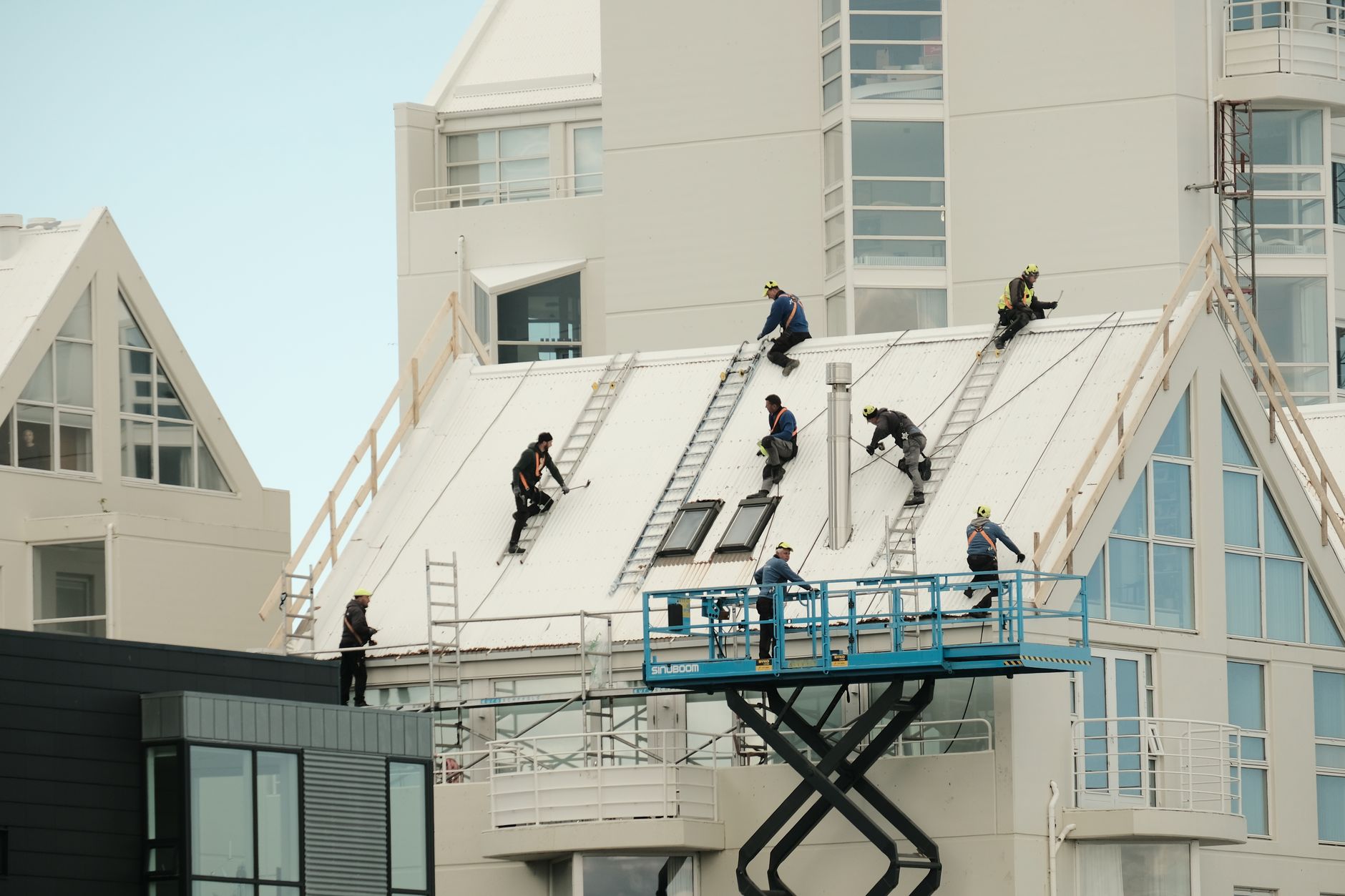
Storm-damaged roofs present real hazards beyond a typical roof — wet or unstable surfaces, potentially compromised decking that can’t safely bear weight in certain areas, and reduced visibility if it’s still actively storming. Professional crews use proper fall protection and assess structural stability before stepping onto a damaged section, which is a meaningful reason to avoid attempting this yourself even if it seems straightforward.
Documentation Before Covering the Damage
Because a tarp covers the damage from view, we photograph everything before placing it — both for insurance documentation and to give our own team an accurate reference for planning the permanent repair. Skipping this step means losing the ability to fully document the original damage extent later.
What Happens After the Tarp Goes Up
A tarp buys time; it doesn’t restore the roof’s actual weatherproofing or address the underlying damage. Every emergency tarp job should come with a clear follow-up conversation about the permanent repair timeline, so you’re not left wondering how long the temporary fix is supposed to last or what happens next.
Frequently Asked Questions
How do I know if my situation actually needs emergency tarping versus a scheduled repair?
How long can a tarp safely stay on a roof?
Why does it matter how a tarp is installed?
Can I put a tarp on my own roof to save time or money?
Does tarping count toward my insurance claim, or is it a separate cost?
Related Services
Related Reading
Ready for a Roof That Lasts Through Cleveland Winters?
Get a free, no-pressure inspection and written estimate from a local crew.